How to Write a Resume with No Experience in 2026
Starting your job search can feel overwhelming, especially when you’re staring at a blank page and wondering how to write a resume with no experience. Here’s the good news: everyone starts somewhere. Whether you’re a high school graduate, a college student, or making a big career switch, your first resume is all about showing what you do have—not worrying about what you don’t.
Think of this as your chance to showcase your strengths, your potential, and the skills you’ve built through school, volunteering, or life in general.
The following will cover:
- How to write a resume with no job experience
- Personal profile examples for your resume
- Examples of resumes for students with little or no experience
- How to highlight your skills on your resume
- Sample of a resume with no work experience
- Resume checklist for those with no experience
10 tips on how to write a CV with no experience
Tip 1: Lead with a strong summary. Even if you’ve never had a job.
At the very top of your resume, the summary is your quick “about me” that shows employers who you are and what you can offer, even if you haven’t worked before. Think of it as your elevator pitch, where you profile your most important attributes and qualifications. Highlight your education, strengths, and what your goals are. Tailor it to each job if you can, but keep it to 3 to 5 sentences. Want to see how it’s done? Check out our real resume templates for inspiration.
Example:
Why it works:
Employers want to see potential, not just experience. A clear summary tells them you’re proactive and ready to contribute, even if it’s your first professional role.
Industry Specific Summary Examples for Resumes with no Experience
Marketing Entry-Level Resume Summary
Healthcare Assistant Resume Summary
Food Service Resume Summary
Finance Associate Resume Summary
Teaching/Education Resume Summary
Sales Representative Resume Summary
Retail/Customer Service Resume Summary
Engineering Entry-Level Resume Summary
Still in school? Check out our student resume writing guide.

Tip 2: Highlight your skills front and center
When you don't have job experience, your transferable skills are your superpower. Include a “Skills” or “Core Strengths” section right near the top of your resume. Think about what makes you a great teammate, student, or volunteer, and don't just focus on your technical skills. Employers value soft skills like communication, organization, and problem-solving just as much.
Examples of top skills for a no-experience resume:
- Communication
- Teamwork
- Customer service
- Time management
- Problem-solving
- Adaptability
- Tech literacy (Google Workspace, Microsoft Office, etc.)
- Leadership (school clubs, sports, or volunteer roles)
- List any languages you’re fluent in
Pro tip:
Not sure what skills to add? Here’s a list of key skills to use on your resume. If they apply!
Tip 3: Use school, volunteer, or extracurricular experience.
You don’t need to have had a formal job to have experience. Think about school projects, volunteer work, sports teams, or clubs you’ve joined—anything that shows commitment and accountability. Employers appreciate seeing initiative and teamwork, so it's not just about paid roles.
How to list experience without a job title:
Create a section for "Experience" or “Relevant Activities” and include your role, organization, dates, and a few bullet points on what you achieved or learned.
Example:
Event Coordinator, Student Council Jefferson High School, September 2022 - June 2023
- Organized school spirit week activities for over 300 students
- Coordinated with teachers and vendors, staying on budget
- Improved communication and time management skills
Need more ideas? Check out our article on resume tips for students for more ways to make your extracurriculars stand out.
Tip 4: Keep your resume format clean and easy to read
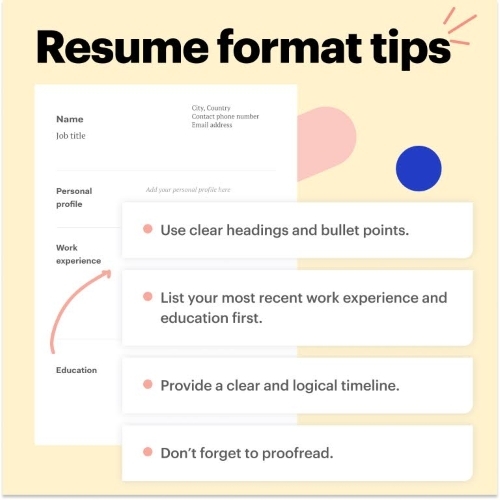
When you’re making a resume with no experience, first impressions are going to matter. A lot. Recruiters usually skim resumes in a few seconds, so make sure yours is easy to scan. Use clear headings, plenty of white space, and a simple font. Keep your layout straightforward. Avoid fancy graphics or complicated designs, especially for online applications.
Pro tip:
Tip 5: Tailor your resume for every job application
Even if you don’t have experience, you can stand out by customizing your resume for each job you apply to. Carefully read the job description and look for specific keywords found in the posting, then use them in your Summary, Skills, and Experience sections. That will show an employer that you’re paying attention, and that you know what they’re looking for.
Why it matters:
A tailored resume is much more likely to catch a hiring manager’s eye, and even more importantly, get your resume past automated systems (ATS) that filter out applications. If you don’t get by that, your resume is never seen by a human.
Need a step-by-step guide on tailoring your resume? Check out our article on how to customize your resume for maximum results.
Tip 6: Use strong action verbs and numbers to show impact
Don’t just tell—show them what you’ve done! Even without job experience, you can use action verbs and numbers to give some impact to your activities. So, instead of saying you “helped with fundraising,” try saying something like “worked with a team of 5 to raise $1,200 for school tech improvements.” That sounds much better, doesn’t it? Quantifying your results adds power and helps recruiters see your achievements clearly.
Examples of action verbs:
- Organized
- Led
- Supported
- Improved
- Created
- Managed
Tip 7: Make your education section work harder
If your work experience is limited, then your education section needs to be in the spotlight. Move your education section to the top and add details that highlight your strengths. This could be relevant coursework, honors, special projects, and leadership roles. And if you have a high GPA, let’s say at least 3.5, apply some bragging rights and list it with pride.
Extra points for:
- Mentioning academic awards, scholarships, or certifications
- Including school clubs or activities where you took the initiative
- Listing coursework that matches the job description
Want more guidance?
Check out this high school graduate resume example.
Tip 8: Include certifications, online courses, or workshops
If you’ve taken any online courses, earned certifications, or completed workshops, even if they weren't part of school, add them to your resume! It’s a great way to show employers that you’re motivated to learn new skills and keep improving, and that’s really valuable when you don’t have any work experience yet.
Examples:
- CPR/First Aid certification
- Google Digital Garage courses
- Microsoft Office Specialist
- Consumer service or retail training workshops
Not sure where to start or how to proceed? Consider our Resume Writing Service.
Tip 9: Add Relevant Hobbies and Interests
If you have the space for it, including a Hobbies & Interests section can help make you more relatable and showcase qualities that might appeal to prospective employers. Think of things like teamwork, creativity, and dedication. Focus on activities that connect to the job or show positive traits such as sports for teamwork, music for discipline, writing for communication, etc.
What works best:
- Team or individual sports
- Creative pursuits like art, music, or writing
- Volunteering or community service
- Relevant clubs or organizations
Tip 10: Proofread and get feedback before you send
First impressions count. They count for a lot. Even a small typo can hurt your chances, especially on a resume with no experience, where every detail matters. After you finish your resume, proofread it carefully for spelling, grammar, and formatting issues. Better yet, ask a teacher, friend, or career counselor to review it. A second set of eyes can help you catch errors you might have missed.
Pro tip:

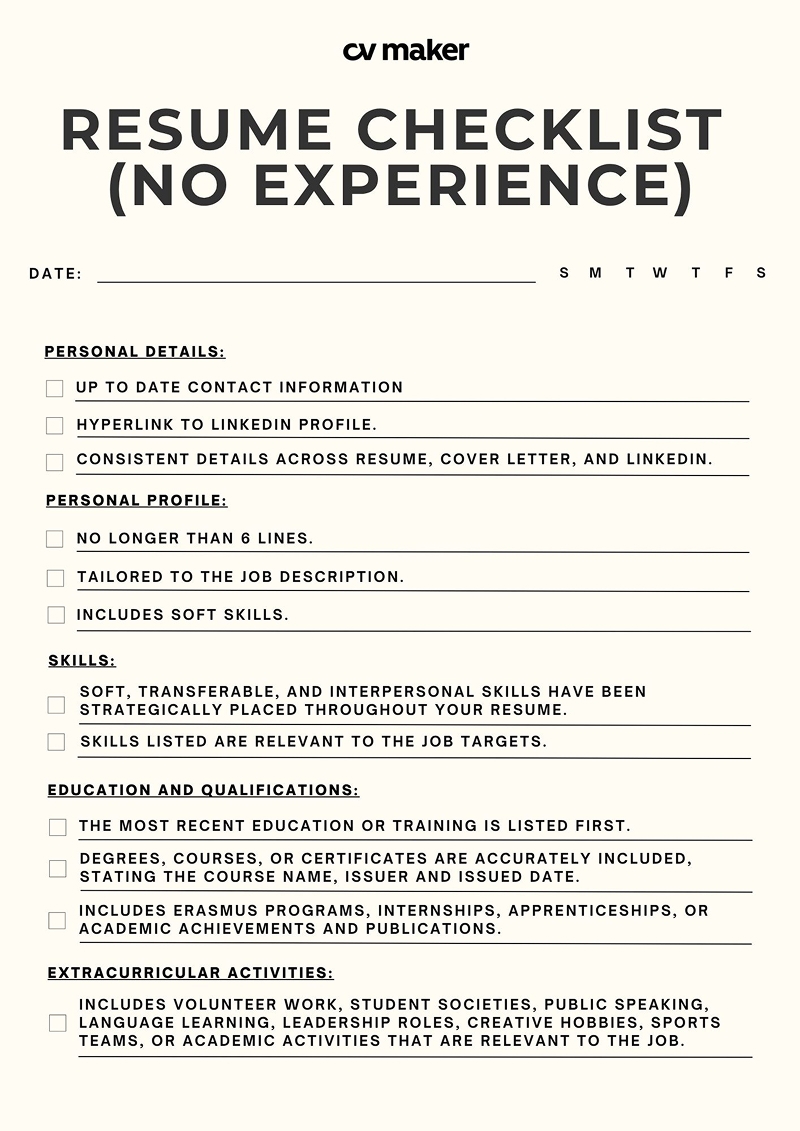
Resume Checklist: No Experience Edition
Key Takeaways
Proofreading isn’t your last step! Before you send out your first resume, keep these do's and don'ts in mind so you'll have the best shot at landing an interview—even without experience!
Dos:
- Tailor your resume for every job: Use keywords from the job posting and highlight your most relevant skills or achievements. It will also get your resume past the ATS bot and in front of human eyes.
- Focus on transferable skills: Emphasize communication, teamwork, organization, problem-solving, and other soft skills.
- Showcase your education: Include relevant coursework, school projects, honors, and leadership roles.
- Use strong action verbs: Start each bullet point with dynamic verbs. Add numbers or achievements where possible.
- List extracurriculars, volunteering, and certifications: They can demonstrate your initiative and practical skills.
- Proofread everything carefully: Ensure your resume has no errors. It's always better to get someone else to proofread.
Don’ts
- Don't leave resume sections blank: Always fill them with education, activities, or personal projects, even if you lack formal work experience.
- Don’t use generic language: Avoid clichés like “hard worker” without showing how you demonstrated those qualities.
- Don't forget formatting: Keep your resume neat, easy to scan, and consistent in style.
- Don't exaggerate or lie: Be honest. Employers can spot or check misleading information quickly.
- Don't skip customization: Sending the same resume everywhere decreases your chances of standing out.
Next Steps
Now that your resume is ready, it's time to take action. Don't you feel better now that you know you can start your job search with confidence?
First, check your resume one last time then write tailored cover letters for each application you plan to send. Then apply for entry-level roles that match your skills. As you do, keep learning and improving your skills, as this will make your resume stronger. Finally, remember that everyone started somewhere. Each application you send will bring you closer to your first job, so stay persistent and don't get discouraged.
FAQs
What if I have no experience at all? Should I still make a resume?
Yes, you should! Use your education, volunteer work, school projects, extracurriculars, and any special skills to show what you're capable of. Employers know everyone starts somewhere.
What's the best length for a resume with no job experience?
Keep it to one page and aim for a clear, easy-to-read format that highlights your most relevant skills, education, and achievements.
Should I include hobbies and interests on a no experience resume?
Yes, you should, but only if they show the qualities or skills an employer might value. Keep them brief and relevant. Think of things like teamwork, dedication, or creativity.
Do I need a cover letter?
You definitely do. A cover letter is a great way to introduce yourself and explain your interest in the job, especially when you’re applying with a resume that has no job experience. It can set you apart from other applicants.
What is the best format for a resume with no work experience?
There are no strict formatting rules for a no-experience resume, but you should choose a format that will best align with the job requirements and your experience level.
- Chronological: This format is something that could work well for everyone, but it's better for professionals who have some established work history.
- Skills-based: This format is a great choice for entry-level candidates who have valuable skills but no experience.
- Combined: This is a flexible format that's suitable for a variety of candidates, highlighting skills and work history and presenting them in a way that emphasizes how their skills relate to past roles.
What are the best job types for applicants with no experience?
The good news is there are several beginner-friendly job options that don't require a lot of experience. Check out the following resume examples for some inspiration.
What's the difference between a CV and a resume?
Traditionally, a CV (curriculum vitae) is longer, more detailed, and used for academic or research roles, while a resume is shorter and tailored to each job. But for the most part, they're used interchangeably—especially outside of academia—and which word you use often comes down to regional preference. So don't stress that you've searched for how to make a resume with no experience when you should have been searching for how to make a CV with no experience!
What should you not put on a resume?
Avoid any personal information like your age, photo, or marital status. You shouldn't add any unrelated jobs or experiences that don't add value to your resume. And you should definitely avoid anything that's untrue or exaggerated. Also, skip statements like "references available upon request," as they are outdated. Employers will typically ask for references during the hiring process.
What is the 7- second rule for resumes?
On average, a hiring manager will spend about seven seconds on an initial resume scan. That means your resume needs to highlight your best qualifications right up front, be easy to read, and show why you're a good fit.