
Arts & Entertainment1K views
Cover Letter Examples and Writing Guides
Explore professional cover letter examples for different jobs and career stages. See how to introduce yourself, demonstrate your skills, and explain your interest in a role. Use these examples of a cover letter as inspiration, then personalize your application with your own experience.

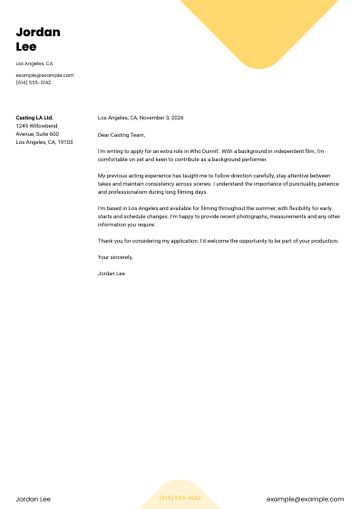
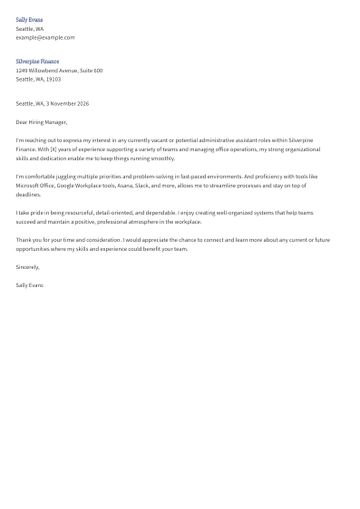
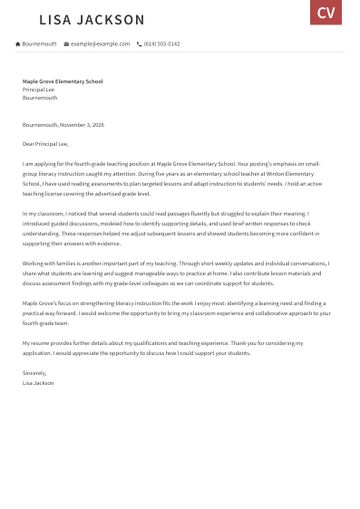
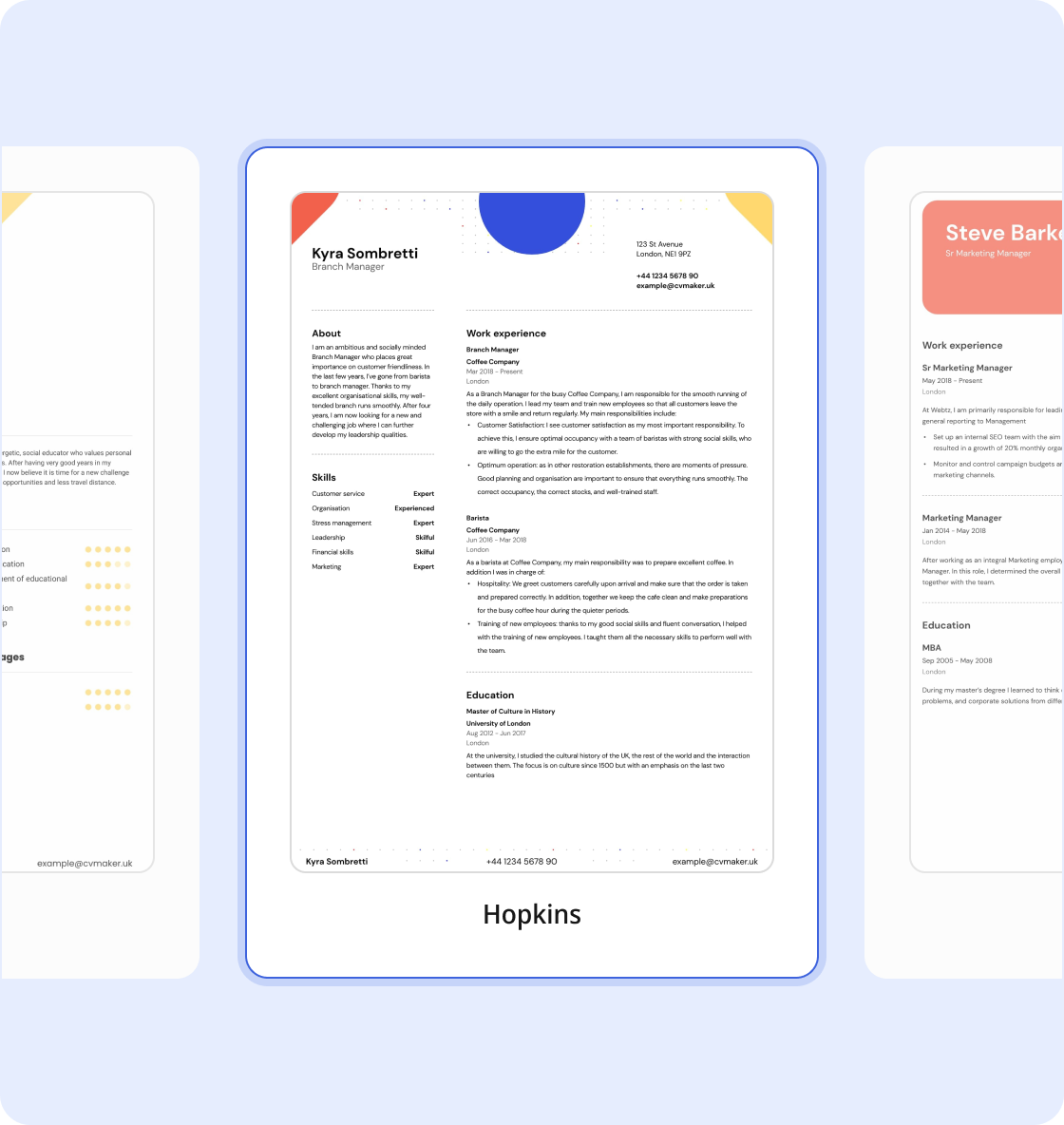
Perfect pairing of cover letter and resume examples
Take your application to the next level by pairing your professional cover letter with a expertly-written resume example. Seamlessly complement your cover letter with a resume to enhance your candidacy. Explore our curated collection of resume examples now for a complete and polished job application package.
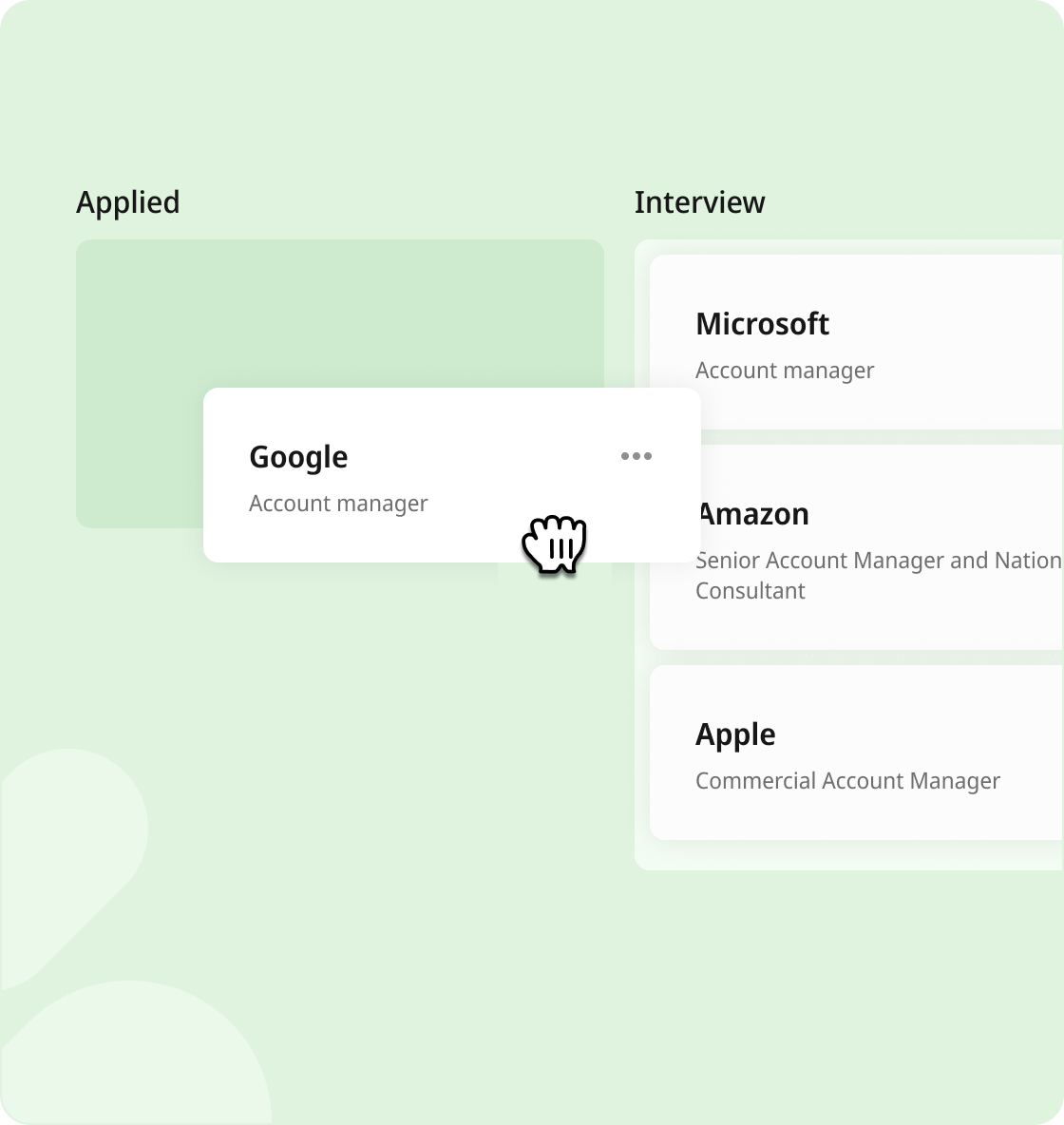
Stay organised with the Job Application Tracker
Take control of your job hunt:
Track your progress at a glance
Move applications easily through each stage
Keep notes, dates, and links in one place
Attach tailored resumes and cover letters with a click
Simplify your job search
Gain insights from our original content
Explore all articles


Cover Letter Examples for Jobs in Every Industry
Find an example that matches your target job, industry, or level of experience. Read the accompanying guide to understand which skills to highlight and how to connect your background to the position.
If your exact job isn’t listed, choose an example with similar responsibilities. Someone applying for a reception role, for instance, could also draw ideas from an administrative or customer service letter.
To adapt an example:
Identify the main requirements in the job advertisement.
Choose one or two experiences that demonstrate those requirements.
Explain why this particular role or organization interests you.
Replace all sample names, achievements, and contact details with your own.
Starting your career? Use evidence from coursework, placements, volunteering, or part-time work to demonstrate relevant skills.
What Makes a Good Cover Letter Example?
A good cover letter example shows how to make a clear case for an interview. It connects the applicant’s experience to the employer’s needs through:
A specific opening: Names the position and introduces a relevant strength or reason for applying.
Evidence of ability: Describes a contribution, achievement, or project that demonstrates useful skills.
A clear connection to the job: Explains how that experience prepares the applicant for the role.
Genuine motivation: Gives a concrete reason for choosing the employer.
A concise format: Usually fits on one page, with short paragraphs and a straightforward closing.
For example, “I have strong organizational skills” tells the employer little. “I coordinated weekly schedules for a team of 12 across three locations” provides evidence they can assess.
How to Structure a Cover Letter
Use the following structure to keep your letter focused and easy to follow. Follow any specific instructions in the application.
1. Contact details and date
Include your name, professional email address, and phone number. Add the date and recipient’s details when submitting a formal document. If you’re writing directly in an email, your contact details can sit beneath your signature.
2. Greeting
Address the recipient by name when it’s available. Otherwise, use a greeting such as “Dear Hiring Manager” or “Dear [Department] Hiring Team.”
3. Opening paragraph
State the position you’re applying for and introduce your strongest relevant qualification or motivation. Make it clear why this opportunity fits your background.
4. Evidence and suitability
Use one or two short paragraphs to connect your experience to the job requirements. Describe a relevant achievement, explain your contribution, and show what you could bring to the team.
5. Closing paragraph
Reaffirm your interest and express your willingness to discuss the opportunity. Thank the reader for considering your application.
6. Sign-off
Finish with a professional closing, such as “Kind regards” or “Sincerely,” followed by your name. Keep the tone appropriate to the employer and destination country.
Short Cover Letter Examples
A short cover letter works well when an employer requests a brief introduction or when you can demonstrate your suitability through one strong example. Follow any word limit provided.
Use three focused paragraphs:
Your introduction: The role you want and why you’re a suitable candidate.
Your evidence: A relevant skill or achievement, connected to the employer’s needs.
Your closing: Your interest in a conversation and a brief thank-you.
Keep it short: Aim for one page – a short cover letter often makes a bigger impression than a long, wordy one.
Keep the strongest evidence and remove repeated information. Explore our short cover letter examples for concise ways to introduce your application.
Tips to Avoid Cover Letter Mistakes
1. Tailor your letter to each opportunity
Mistake: Sending a generic letter that only changes the company name.
How to fix it: Match your examples to the job requirements and explain why this particular role interests you.
2. Add context to your resume
Mistake: Repeating your employment history without adding useful information.
How to fix it: Expand on one relevant achievement, explaining your contribution and how it prepares you for the position.
3. Back up your skills with evidence
Mistake: Using phrases like “excellent communicator” without supporting examples.
How to fix it: Describe how you used the skill and what you achieved. Include accurate figures where they add context.
4. Show what you can contribute
Mistake: Focusing on what you want to gain rather than what you offer.
How to fix it: Connect your skills and experience to the employer’s needs and explain how you could help the team.
5. Check your application before sending
Mistake: Leaving incorrect names, placeholders, spelling errors, or missing attachments.
How to fix it: Proofread the final letter, verify contact details, and check that the correct files are attached.
Cover Letter, Motivation Letter or Application Letter?
Cover letter: Usually accompanies a resume or CV when applying for a particular job. It highlights relevant qualifications and explains your interest in the opportunity.
Motivation letter: Places greater emphasis on your reasons for applying, goals, and interests. It may be requested for study, scholarships, volunteering, or employment. Explore our motivation letter guide for examples.
Application letter: Often used interchangeably with “cover letter,” though some organizations expect a more detailed introduction. Follow the employer’s instructions and consult our application letter examples.
Letter of interest: Introduces you to an organization when there may be no advertised vacancy. Explain the type of opportunity you’re seeking and how your experience could be useful.
What to Do When Sending Your Cover Letter
Check whether the employer wants an attachment, text in the email body, or a response through an application form. Follow its file requirements and use clear filenames, such as FirstName_LastName_Cover_Letter.pdf.
If you’re applying by email, use the job title and any requested reference number in the subject line.
Email example: Cover letter attached
Subject: Application for [Job Title] – [Your Name]
Dear [Hiring Manager’s Name],
Please find attached my resume and cover letter for the [Job Title] position at [Company]. My experience in [relevant area] aligns with your requirement for [key skill or responsibility].
Thank you for considering my application. I’d welcome the opportunity to discuss how I could contribute to your team.
Kind regards,
[Your Name]
[Phone Number]
Email example: Cover letter in the email body
Subject: [Job Title] application – [Reference Number] – [Your Name]
Dear [Hiring Manager’s Name],
I’m interested in the [Job Title] position at [Company]. With experience in [relevant area], I can contribute to [specific requirement or team objective].
In my recent role, I [specific action and outcome]. This experience developed my ability to [skill relevant to the advertised role]. Your work in [specific area] particularly interests me because [genuine reason].
I’ve attached my resume and would welcome a conversation about the position. Thank you for your time and consideration.
Kind regards,
[Your Name]
[Phone Number]
Pair Your Cover Letter With Your Resume
Use your resume to present your experience and qualifications, then use your cover letter to explain their relevance to the opportunity. Keep job titles, dates, achievements, and contact details consistent across both documents.
Compare our resume examples with the cover letter examples on this page to plan a coordinated application. Choose ATS-friendly resume templates with clear formatting, and use consistent fonts and colors across your documents.
FAQs
What are the best cover letter examples?
The best cover letter examples match your target role and demonstrate how to support your qualifications with evidence. Choose one with relevant responsibilities and an appropriate tone, then adapt its approach to your own experience. A letter’s usefulness matters more than its length or design.
How do I write a cover letter with no experience?
Focus on relevant skills developed through education, projects, volunteering, placements, or part-time work. Choose a specific example that demonstrates a requirement from the job advertisement, then explain your interest in the role and willingness to learn.
Can I copy a cover letter example?
Use an example to understand the structure and level of detail, but write your own content. Replace every sample detail and achievement with accurate information. Personalize the letter so it explains your suitability for the particular opportunity.
How long should a cover letter be?
For most job applications, aim for one page with three to five short paragraphs. A brief email introduction can be shorter. Follow the employer’s word limit or instructions when provided.
Do I need a cover letter for every job application?
Include one when the employer requests it. If it’s optional, consider whether it adds useful context, such as explaining a career change or a particular connection to the role. Don’t include extra documents when the employer asks you not to.
Can I use AI to write my cover letter?
AI can help organize your ideas or refine a draft. Provide your real experience and the job requirements, then check every suggestion for accuracy, relevance, and tone. Remove generic claims and make sure the final letter sounds like you.